Electric Scooter Hand Signals and Communication
Riding an electric scooter safely isn't just about speed and balance—it's also about communicating your intentions. Discover the essential hand signals every rider should know, plus tips for group rides and sharing the road.

Indice
- Electric Scooter Hand Signals and Communication: The Complete Guide
- Why Hand Signals Matter for Electric Scooter Riders
- Essential Hand Signals for Electric Scooter Riders
- 1. Left Turn
- 2. Right Turn
- 3. Slow Down or Stop
- 4. Hazard or Obstacle
- 5. Group Riding Signals
- Communication Beyond Hand Signals
- Use Your Voice
- Eye Contact
- Body Language
- Technology Aids
- Sharing the Road: Etiquette and Best Practices
- On Bike Lanes
- On Shared Paths
- On Roads
- Group Rides
- Legal Requirements and Local Variations
- Common Mistakes to Avoid
- Choosing the Right Scooter for Safe Communication
- Frequently Asked Questions
- Do I need to use hand signals on an electric scooter?
- What is the correct hand signal for a right turn?
- How do I signal a stop on an electric scooter?
- Can I use electronic turn signals instead of hand signals?
- What should I do if I need to signal but my hand is on the throttle?
- Conclusion
Electric Scooter Hand Signals and Communication: The Complete Guide
Electric scooters have become a staple of urban commuting, offering a fun and efficient way to navigate city streets. But as more riders hit the pavement, the need for clear communication and safety becomes paramount. Unlike cars, electric scooters lack turn signals and brake lights (unless you've added aftermarket accessories), so hand signals are your primary tool to communicate with drivers, cyclists, and pedestrians. In this guide, we'll cover the essential hand signals every electric scooter rider should know, along with communication strategies for group rides and sharing the road responsibly.
Why Hand Signals Matter for Electric Scooter Riders
Hand signals are not just a courtesy—they're often a legal requirement. Many jurisdictions classify electric scooters as vehicles, meaning you're subject to the same rules as bicycles, including signaling turns and stops. Even where not mandated, hand signals dramatically reduce the risk of accidents by making your intentions predictable. A study by the National Highway Traffic Safety Administration (NHTSA) found that failing to signal is a contributing factor in a significant number of bicycle and pedestrian accidents. For electric scooter riders, who are smaller and less visible than cars, signaling is even more critical.
Beyond legality, hand signals foster better relationships with other road users. When drivers understand your intentions, they're more likely to give you space and cooperate. Pedestrians also appreciate knowing which way you're going, especially on shared paths. So, mastering hand signals is a win-win for safety and harmony.
Essential Hand Signals for Electric Scooter Riders
Here are the core hand signals you should use consistently. Practice them in a safe area until they become second nature.
1. Left Turn
Extend your left arm straight out horizontally, palm facing forward. This is the universal signal for a left turn. If you're riding in a country where traffic drives on the left, you'll still use your left arm for a left turn, but adapt as needed.
2. Right Turn
There are two common ways to signal a right turn:
- Left arm bent upward at 90 degrees: Extend your left arm out and bend your elbow so your hand points up. This is the standard signal in many regions.
- Right arm extended straight out: Extend your right arm horizontally, palm forward. This is more intuitive for some riders and is acceptable in many places.
Check local regulations to know which is preferred in your area.
3. Slow Down or Stop
To signal that you're slowing down or stopping, extend your left arm out and bend your elbow downward, palm facing back. This indicates to those behind you that you're decelerating. Alternatively, you can use your right arm in the same manner.
4. Hazard or Obstacle
If you spot a hazard (pothole, debris, parked car door), point down at it with your left or right hand. This warns riders behind you to avoid it.
5. Group Riding Signals
When riding in a group, additional signals help keep everyone safe:
- Road debris: Point down at the hazard.
- Slowing: Arm out with palm facing down, moving up and down.
- Stopping: Arm bent downward, palm back.
- Turning: As above.
- Single file: One arm raised with one finger up.
- Double file: Two fingers up.
Remember: always signal your intentions well in advance—at least 100 feet before a turn (about 30 meters). And don't forget to check over your shoulder before maneuvering.
Communication Beyond Hand Signals
While hand signals are crucial, they're not the only way to communicate. Here are other strategies to stay safe and connected on the road.
Use Your Voice
A friendly "passing on your left" or "on your right" alerts pedestrians and cyclists to your presence. Speak clearly and loudly enough to be heard, but avoid shouting aggressively. A bell or horn can also be effective, but use it sparingly to avoid startling others.
Eye Contact
Making eye contact with drivers at intersections confirms they've seen you. If you don't get eye contact, assume they haven't seen you and proceed with caution.
Body Language
Your posture and positioning communicate a lot. Riding predictably—maintaining a straight line, avoiding sudden swerves—helps others anticipate your moves. Also, consider wearing bright or reflective clothing to increase your visibility.
Technology Aids
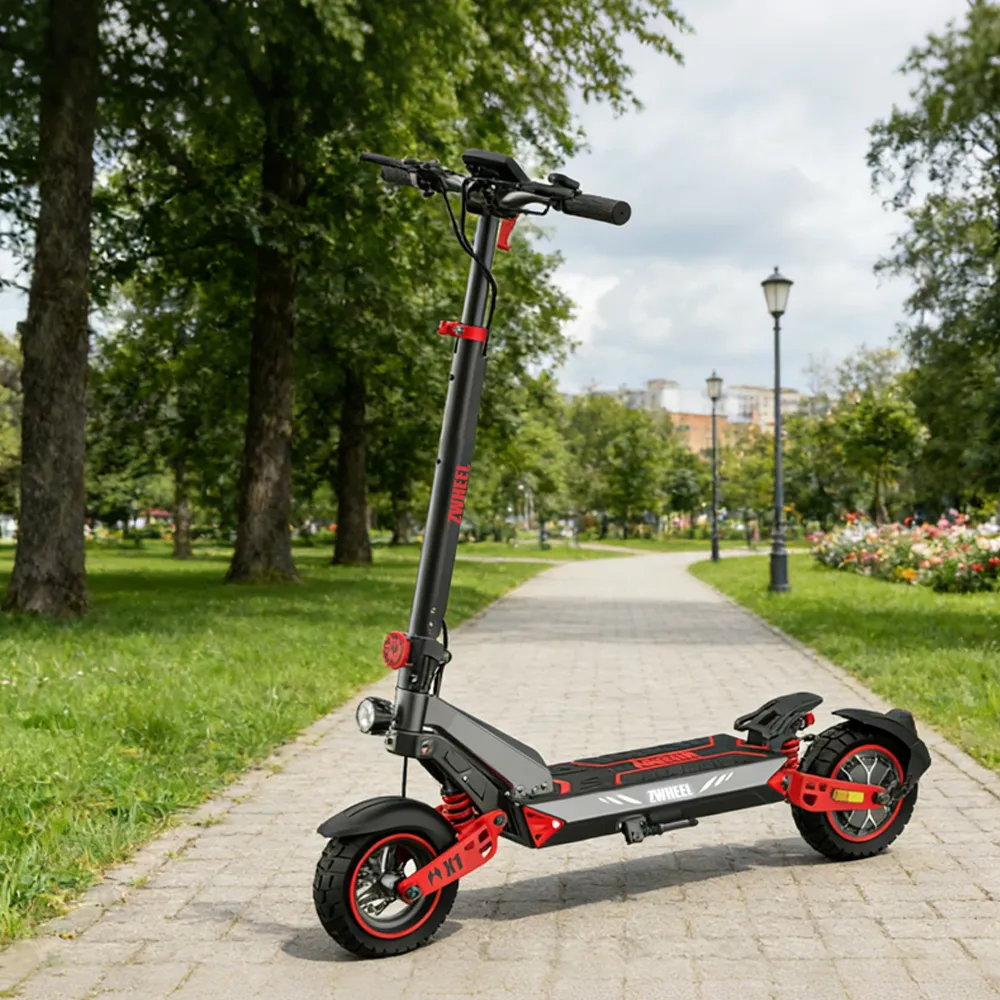
Some electric scooters come with turn signals or brake lights. If yours doesn't, consider adding aftermarket accessories. There are also smart helmets and bike lights that can enhance communication. For example, the Zwheel ZSA Plus is a commuter scooter that many riders customize with additional safety lights.
Sharing the Road: Etiquette and Best Practices
Electric scooters are part of the traffic ecosystem. Here's how to coexist harmoniously with others.
On Bike Lanes
Bike lanes are your friend. Use them when available, and follow the flow of traffic. Signal your turns and stops, and yield to pedestrians who may cross. When passing other cyclists, give them space and announce your presence.
On Shared Paths
Multi-use paths require extra caution. Keep speeds moderate, especially around pedestrians and pets. Use hand signals and your voice to communicate. Remember that pedestrians have the right of way.
On Roads
If you must ride on the road, act like a vehicle: ride with traffic, obey traffic signals, and use hand signals. Stay visible and avoid riding in blind spots. For higher-performance scooters like the Zwheel ZSD1, which can reach higher speeds, extra vigilance is needed.
Group Rides
Group rides are social and fun, but they require coordination. Establish a leader and a sweeper (the person at the back). Use hand signals and verbal calls to relay information through the group. Ride in a staggered formation when safe, and single file on narrow roads. Ensure everyone knows the route and has a way to communicate (e.g., a group chat or walkie-talkie app).
Legal Requirements and Local Variations
Hand signal laws vary by location. In many US states, electric scooter riders are required to signal turns and stops. In Europe, regulations differ by country. Always check your local laws. For example, in California, Vehicle Code 21201 requires cyclists (and often e-scooter riders) to signal turns. However, the law allows you to keep both hands on the handlebars if you're in a situation where signaling could be unsafe. It's worth noting that some jurisdictions allow alternatives like electronic turn signals if equipped.
Regardless of legal specifics, signaling is a best practice. It's better to over-communicate than to surprise others.
Common Mistakes to Avoid
Even experienced riders can slip up. Watch out for these pitfalls:
- Signaling too late: Signal well in advance to give others time to react.
- Forgetting to check behind: Always look over your shoulder before turning or changing lanes.
- Over-signaling: Don't leave your arm out indefinitely; signal, then return your hand to the handlebars for control.
- Assuming you're seen: Even with signals, never assume a driver has seen you. Make eye contact when possible.
- Ignoring local laws: Fines can apply for failing to signal. Know the rules.
Choosing the Right Scooter for Safe Communication
Some electric scooters are better equipped for safe riding. Features like bright headlights, turn signals, and responsive brakes enhance your ability to communicate and be seen. For urban commuters, the Zwheel D3S-S offers a balance of power and safety features, while the Zwheel ZSB2 is an all-terrain option with robust lighting. If you're into off-road riding, the Zwheel ZSD2 provides high performance, but remember that hand signals are still essential when you encounter others on trails.
Frequently Asked Questions
Do I need to use hand signals on an electric scooter?
In many places, yes—hand signals are legally required when turning or stopping, just as they are for bicycles. Even if not mandated, they're strongly recommended for safety.
What is the correct hand signal for a right turn?
You can either extend your left arm and bend it upward at 90 degrees, or extend your right arm straight out. Check local guidelines for the preferred method.
How do I signal a stop on an electric scooter?
Extend your left arm out and bend your elbow downward, palm facing back. This indicates you're slowing or stopping.
Can I use electronic turn signals instead of hand signals?
Some jurisdictions allow electronic signals if they're clearly visible. However, hand signals are universally understood and should be your primary method.
What should I do if I need to signal but my hand is on the throttle?
Signal early and briefly, then return your hand to the throttle. If you're in a situation where signaling compromises control, prioritize safety and use alternative communication like a bell or voice.
Conclusion
Mastering electric scooter hand signals and communication is a fundamental part of being a responsible rider. By signaling your intentions clearly, using your voice, and following road etiquette, you contribute to a safer environment for everyone. Remember to practice your signals, stay visible, and always ride predictably. Whether you're commuting on a Zwheel ZSA Plus or hitting the trails on a high-performance model, communication is key. Stay safe, ride smart, and enjoy the journey!
Scritto da
Zwheel Team
Parte del team editoriale Zwheel, con focus su mobilita elettrica, guide prodotti e consigli.