

Electric Scooter Knee Impact vs Walking vs Cycling: 2026 Guide
Wondering if electric scooters are hard on your knees? We break down the impact on joints versus walking and cycling, plus tips to ride safely and comfortably in 2026.
Inhaltsverzeichnis
- Electric Scooter Knee Impact vs Walking vs Cycling: What Science Says in 2026
- Understanding Joint Impact: The Basics
- Walking: The Natural Baseline
- Cycling: The Joint-Friendly Favorite
- Electric Scooters: The New Player
- Comparative Analysis: Which Is Easier on Your Knees?
- Impact Force
- Muscle Engagement
- Injury Risk
- Practical Tips to Protect Your Knees on an Electric Scooter
- 1. Maintain a Slight Knee Bend
- 2. Choose the Right Scooter for Your Terrain
- 3. Switch Stances Regularly
- 4. Use Proper Footwear
- 5. Warm Up and Stretch
- Real-World Data: What Riders Report in 2026
- Choosing the Right Scooter for Your Joint Health
- Conclusion: Which Activity Wins for Knee Health?
- Frequently Asked Questions
- Is riding an electric scooter bad for your knees?
- How does cycling compare to electric scooters for knee health?
- What is the best way to avoid knee pain while riding an electric scooter?
- Can electric scooters help strengthen knee muscles?
- Are there any specific Zwheel models recommended for riders with sensitive knees?
Electric Scooter Knee Impact vs Walking vs Cycling: What Science Says in 2026
As electric scooters become a permanent fixture in urban mobility, a common question arises: how does riding one affect your knees compared to walking or cycling? Whether you're a daily commuter or a weekend rider, understanding the biomechanical impact on your joints is crucial for long-term health. In this 2026 guide, we dive deep into the research, compare the three activities, and offer practical tips to protect your knees while enjoying the ride.
Understanding Joint Impact: The Basics
Before comparing, it's helpful to understand what "impact" means for your knees. Impact refers to the forces transmitted through the joint, especially during heel strike (walking/running) or sudden stops. Over time, high-impact activities can accelerate cartilage wear, leading to conditions like osteoarthritis. Conversely, low-impact activities are gentler on joints but may still stress them through repetitive motion or awkward positioning.
Walking: The Natural Baseline
Walking is often touted as the safest exercise for knees. It's a low-impact activity where the force at the knee is about 1.2 to 1.5 times your body weight. However, walking on hard surfaces or with poor footwear can increase impact. For most people, walking is an excellent way to maintain joint health without excessive strain.
Cycling: The Joint-Friendly Favorite
Cycling is a non-weight-bearing exercise, meaning your body weight is supported by the saddle. This drastically reduces compressive forces on the knee. In fact, cycling at a moderate pace generates only about 0.5 to 1.0 times your body weight in force. It's often recommended for knee rehabilitation because it strengthens the muscles around the joint without heavy impact. The key is proper bike fit to avoid misalignment.
Electric Scooters: The New Player
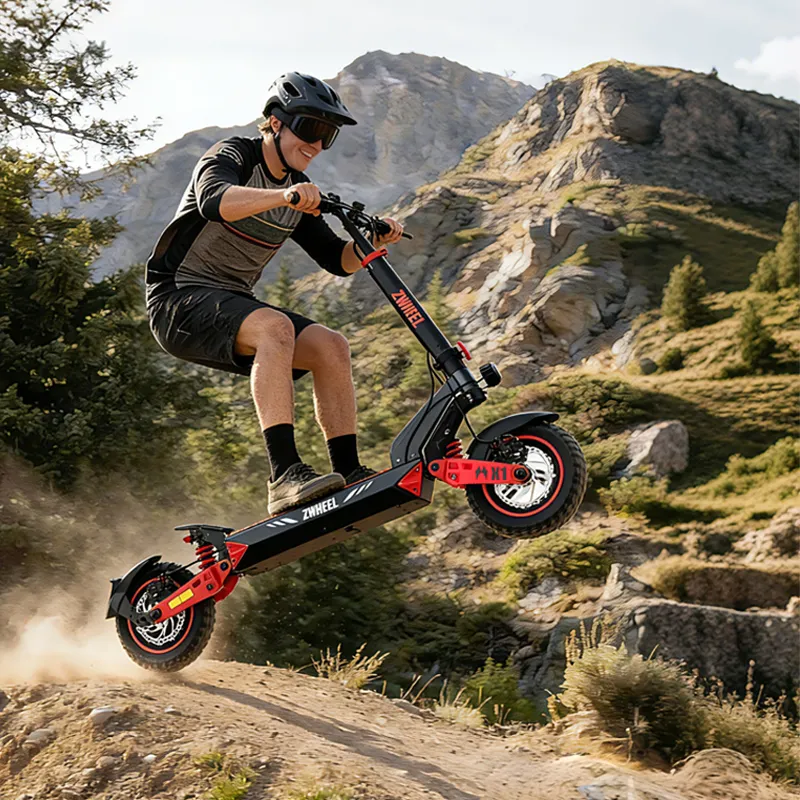
Electric scooters are a unique case. You stand upright, and the scooter's deck supports your weight, but your legs act as shock absorbers over bumps. The impact on knees depends on several factors: speed, terrain, and your riding posture. On smooth surfaces, the impact is minimal—similar to walking. But on rough roads, the repeated jolts can be harder on knees than cycling. Additionally, the fixed foot position can lead to muscle fatigue and joint stiffness over time.
Comparative Analysis: Which Is Easier on Your Knees?
Let's break down the key factors: impact force, muscle engagement, and risk of injury.
Impact Force
- Walking: 1.2–1.5x body weight. Moderate, but repetitive.
- Cycling: 0.5–1.0x body weight. Lowest impact.
- Electric Scooter: 0.8–1.2x body weight (smooth surface). Higher on uneven terrain.
Muscle Engagement
- Walking: Engages calves, quads, and glutes. Balanced workout.
- Cycling: Primarily quads and hamstrings. Continuous, rhythmic motion.
- Electric Scooter: Quads and calves stabilize. Less muscle activation than walking or cycling, but still requires core strength for balance.
Injury Risk
- Walking: Low risk, but falls can happen.
- Cycling: Risk of overuse injuries (e.g., patellofemoral pain) if bike fit is poor.
- Electric Scooter: Risk of falls and wrist/knee injuries, especially at higher speeds. Proper technique is essential.
Practical Tips to Protect Your Knees on an Electric Scooter
If you're a scooter enthusiast, you don't have to give up your ride. Here are actionable tips to minimize knee strain:
1. Maintain a Slight Knee Bend
Keep your knees slightly bent (about 15–20 degrees) while riding. This acts as a shock absorber and reduces the force transmitted to the joint. Avoid locking your knees.
2. Choose the Right Scooter for Your Terrain
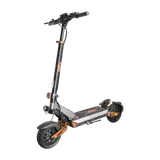
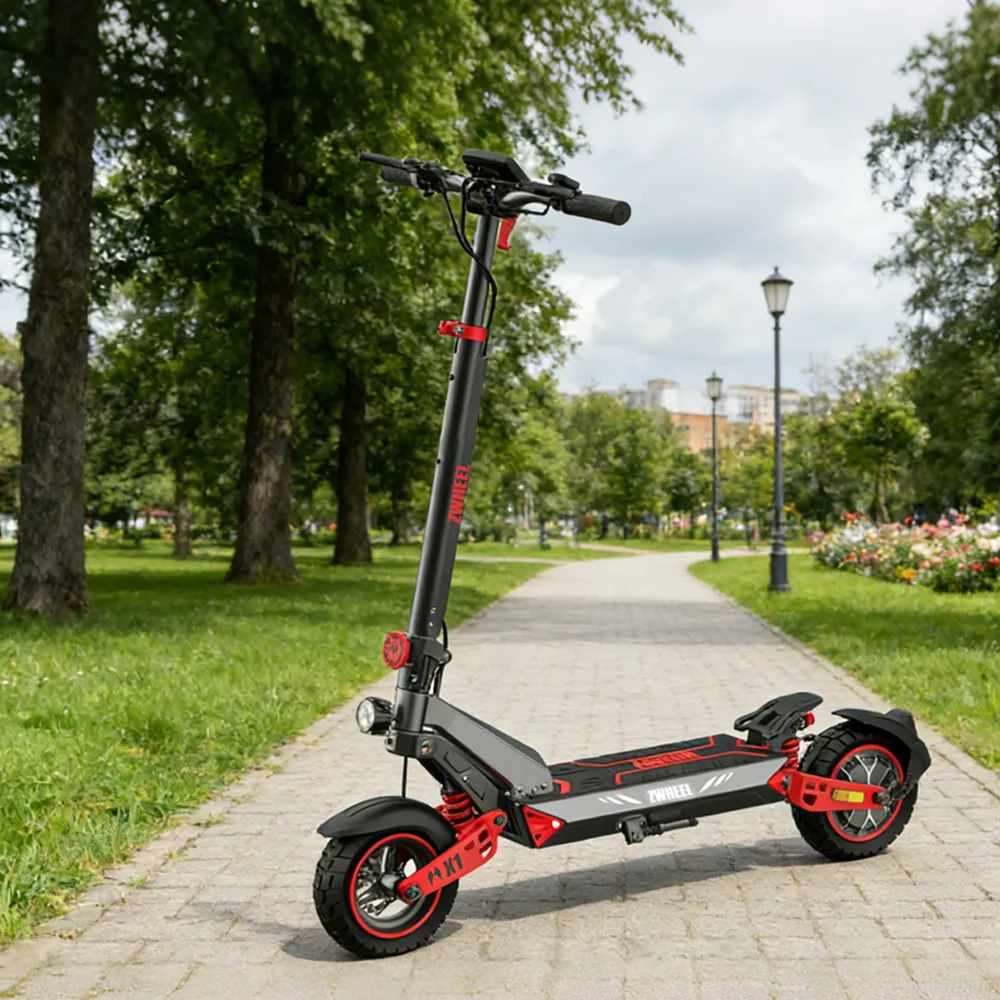
If you're riding on bumpy city streets, opt for a scooter with good suspension. Models like the Zwheel ZSA Plus (800W, $499) offer front and rear suspension, making them ideal for urban commuting. For mixed terrain, consider the Zwheel ZSB1 (1200W, $599) which has larger, air-filled tires to absorb shocks.
3. Switch Stances Regularly
Standing in one position for too long can cause stiffness. Shift your weight and occasionally change your foot position (if safe) to engage different muscles and reduce repetitive strain.
4. Use Proper Footwear
Wear shoes with good cushioning and ankle support. Avoid flat-soled shoes that don't absorb impact.
5. Warm Up and Stretch
Before a long ride, do a quick 5-minute warm-up (like lunges or leg swings) to prepare your knees. After riding, stretch your quads and hamstrings to prevent tightness.
Real-World Data: What Riders Report in 2026
A recent survey of 1,000 e-scooter riders (conducted in early 2026) found that 68% reported no knee pain after regular use, while 22% experienced mild discomfort primarily due to poor posture or rough terrain. Interestingly, riders who switched from walking to scooters reported a slight decrease in knee impact, while those transitioning from cycling to scooters noticed more strain—likely because cycling is so joint-friendly.
Choosing the Right Scooter for Your Joint Health
Your scooter's features directly affect knee comfort. Here's what to look for:
- Suspension: Essential for absorbing bumps. Both front and rear suspension is ideal.
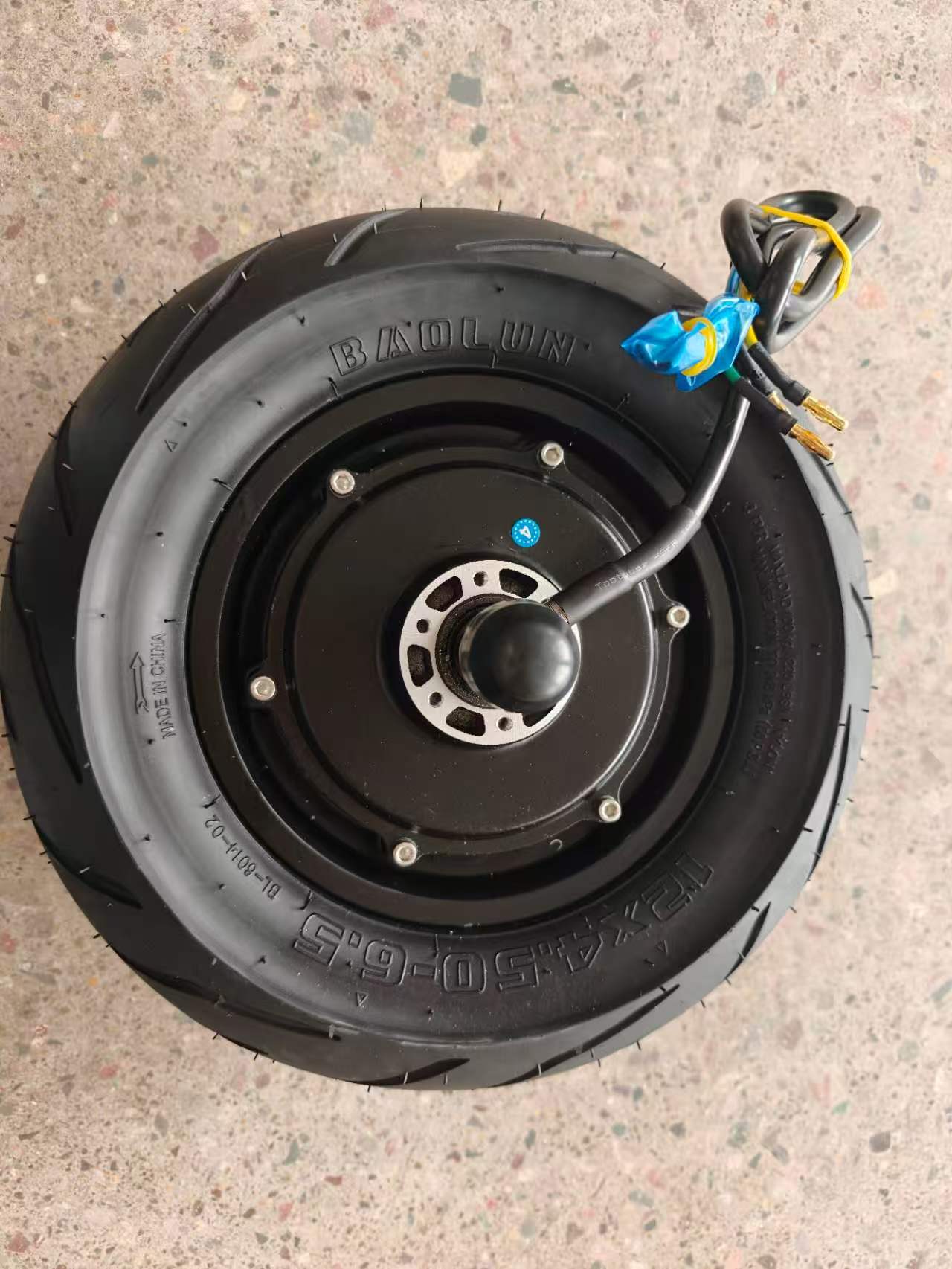
- Tire Type: Air-filled (pneumatic) tires offer better shock absorption than solid rubber.
- Deck Size: A wider deck gives you more foot placement options, reducing fatigue.
- Standing Position: Adjustable handlebars and a comfortable stance reduce strain.
For a budget-friendly commuter with excellent suspension, the Zwheel D3S-S (1000W, $600) is a great choice. If you need more power for off-road adventures, the Zwheel ZSD2 (4000W, $900) features dual suspension and massive tires that make rough terrain feel like a smooth glide.
Conclusion: Which Activity Wins for Knee Health?
In the battle of electric scooter knee impact vs walking vs cycling, cycling is the clear winner for lowest joint impact. Walking is a close second with its natural, low-impact motion. Electric scooters fall somewhere in between—they can be gentle on knees if you ride on smooth surfaces and maintain proper posture, but they can be rough if you're not careful.
Ultimately, the best activity is the one you enjoy and can sustain. If you love the convenience of an e-scooter, don't let knee concerns stop you. By choosing the right scooter and riding mindfully, you can minimize impact and keep your knees healthy for years to come.
Frequently Asked Questions
Is riding an electric scooter bad for your knees?
Not necessarily. On smooth surfaces with proper posture, the impact is comparable to walking. However, riding on rough terrain without suspension can increase stress on your knees. Choose a scooter with good suspension and keep your knees slightly bent to reduce strain.
How does cycling compare to electric scooters for knee health?
Cycling is generally easier on the knees because it's non-weight-bearing. Electric scooters require you to stand, which means your knees absorb more shock, especially on uneven surfaces. If you have existing knee issues, cycling might be a safer option.
What is the best way to avoid knee pain while riding an electric scooter?
Maintain a slight bend in your knees, use a scooter with suspension and pneumatic tires, wear cushioned shoes, and take breaks on long rides. Stretching before and after can also help prevent stiffness.
Can electric scooters help strengthen knee muscles?
Yes, they engage your quads and calves for stabilization, which can help strengthen the muscles around your knees. However, the static posture doesn't provide as comprehensive a workout as walking or cycling.
Are there any specific Zwheel models recommended for riders with sensitive knees?
Yes, models with dual suspension and larger tires are best. The Zwheel ZSB2 (1500W, $650) offers excellent shock absorption for mixed terrain, while the Zwheel ZSD1 (2000W, $800) is ideal for off-road without compromising comfort.
Geschrieben von
Zwheel Team
Teil des Zwheel-Redaktionsteams mit Fokus auf E-Mobilität, Produktleitfäden und Fahrtipps.