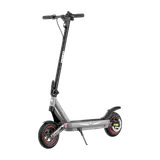
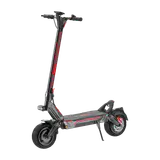
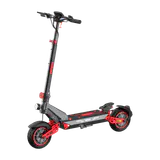
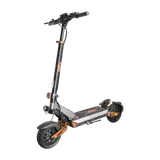
Budget Electric Scooter vs Premium: What You Actually Get
Not all electric scooters are created equal. We break down the real differences between budget and premium models — from battery life and safety to ride quality and long-term value — so you can decide what’s worth your money.
Содержание
- Budget Electric Scooter vs Premium: What You Actually Get in 2026
- Price Point Breakdown: What $300 vs $600 vs $1,500 Buys You
- Under $300 (Budget Entry-Level)
- $500–$800 (Mid-Range / Value Premium)
- $1,000+ (Premium / Performance)
- 5 Key Differences: Safety, Range, Ride Quality, Durability, and Value
- 1. Safety: Brakes, Lights, and Stability
- 2. Range: The Real-World Difference
- 3. Ride Quality: Comfort Over Cobblestones
- 4. Durability and Maintenance
- 5. Long-Term Value: Total Cost of Ownership
- When Is a Budget Scooter Actually Enough?
- Frequently Asked Questions
- Is a $500 electric scooter worth it compared to a $300 one?
- What’s the most important feature to upgrade from budget to premium?
- Do premium electric scooters have better resale value?
- How much should I spend on my first electric scooter?
- Can a budget scooter handle hills?
- Conclusion: What You Actually Get (and What You Pay For)
Budget Electric Scooter vs Premium: What You Actually Get in 2026
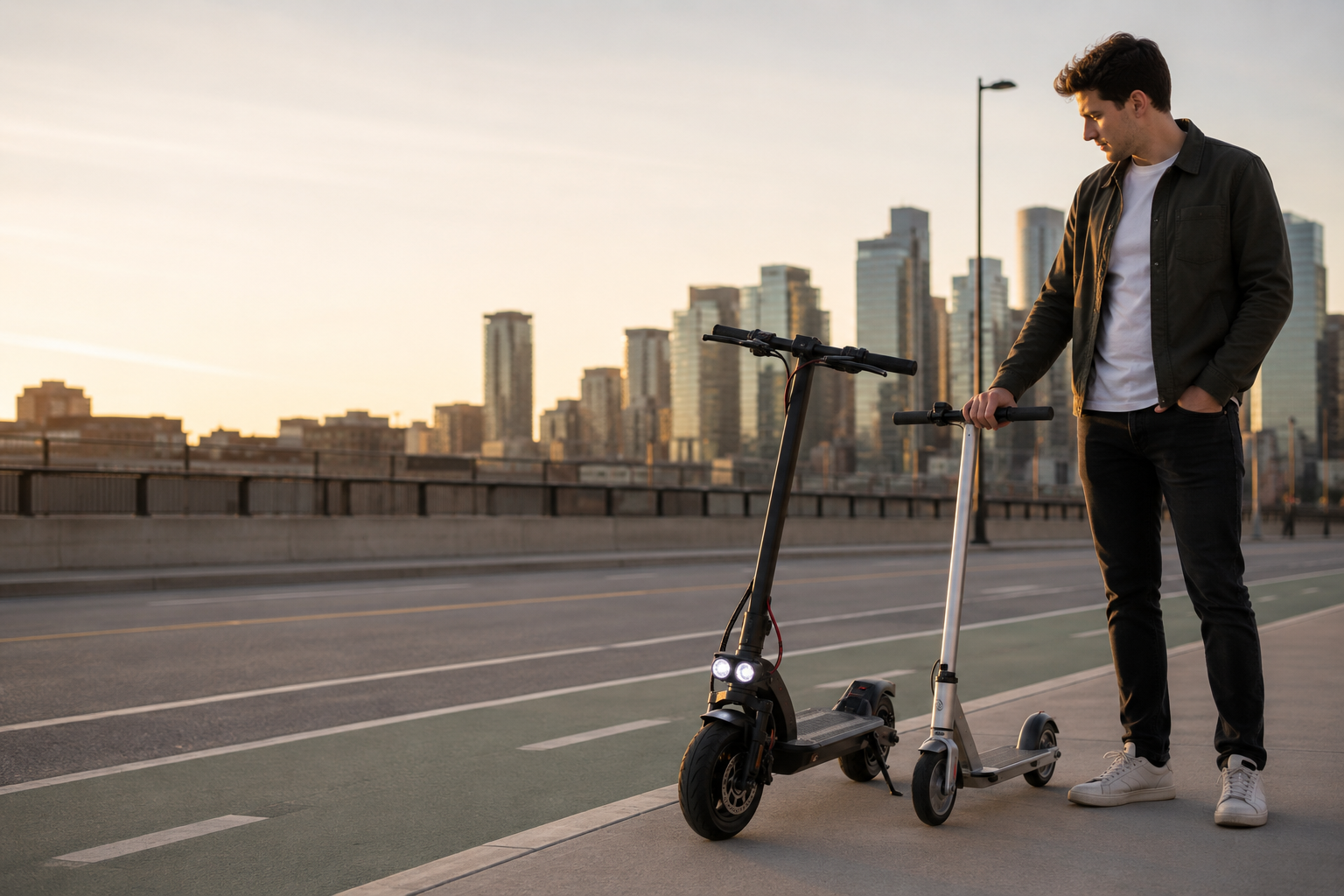
If you’ve been shopping for an electric scooter recently, you’ve probably noticed a huge price gap: you can grab a basic model for under $300, or spend $1,000+ on a premium ride. The question everyone asks: is a premium electric scooter really worth the extra money?
In this guide, we’ll break down exactly what you get — and what you give up — at each price point. Whether you’re a daily commuter, a weekend adventurer, or a first-time buyer, you’ll learn what matters most for your budget. We’ll use real specs, real numbers, and real-world examples from brands like Zwheel to show you the difference.
By the end, you’ll know exactly what you actually get when you choose a budget electric scooter vs premium model — and which one is right for you.
Price Point Breakdown: What $300 vs $600 vs $1,500 Buys You
Let’s start with the raw numbers. Here’s what typical scooters in each price bracket offer:
Under $300 (Budget Entry-Level)
- Motor: 250W–350W (often “peak” rated higher, but sustained power is low)
- Battery: 36V, 5–7Ah (range ~10–15 miles real-world)
- Tires: Solid rubber or basic pneumatic — prone to flats
- Brakes: Rear foot brake or single drum brake
- Suspension: None or very basic spring
- Weight: 25–30 lbs (portable but flimsy)
- Build: Aluminum frame, plastic components, IPX4 water resistance at best
$500–$800 (Mid-Range / Value Premium)
- Motor: 500W–1000W (sustained, reliable power)
- Battery: 48V, 10–15Ah (range ~20–30 miles)
- Tires: Pneumatic tubeless (better grip, fewer flats)
- Brakes: Disc brakes (front and rear) or drum + regenerative
- Suspension: Front and rear spring or hydraulic
- Weight: 35–45 lbs (sturdier but still portable)
- Build: Reinforced frame, better water sealing (IPX5+), brighter lights
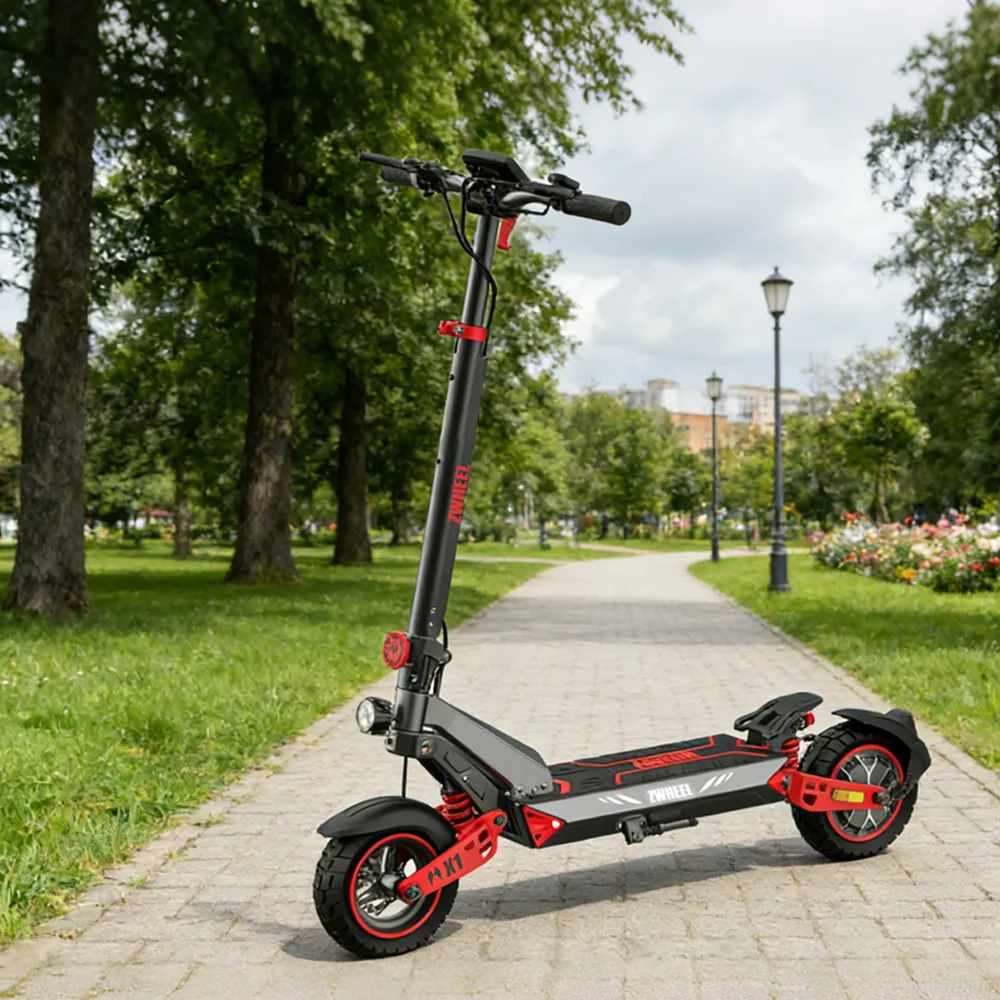
Example: The Zwheel D3S-S ($600) packs a 1000W motor, 48V battery, dual disc brakes, and a front suspension — a huge step up from any $300 scooter.
$1,000+ (Premium / Performance)
- Motor: 1500W–6000W (insane torque, hill-climbing ability)
- Battery: 52V–72V, 20Ah+ (range 40–60+ miles)
- Tires: Off-road knobbies or hybrid (10”+ diameter)
- Brakes: Hydraulic disc brakes + regenerative (powerful, consistent)
- Suspension: Full hydraulic or air suspension (adjustable)
- Weight: 50–80 lbs (beast mode, less portable)
- Build: Aerospace-grade aluminum, IPX6–IPX7, app connectivity, turn signals
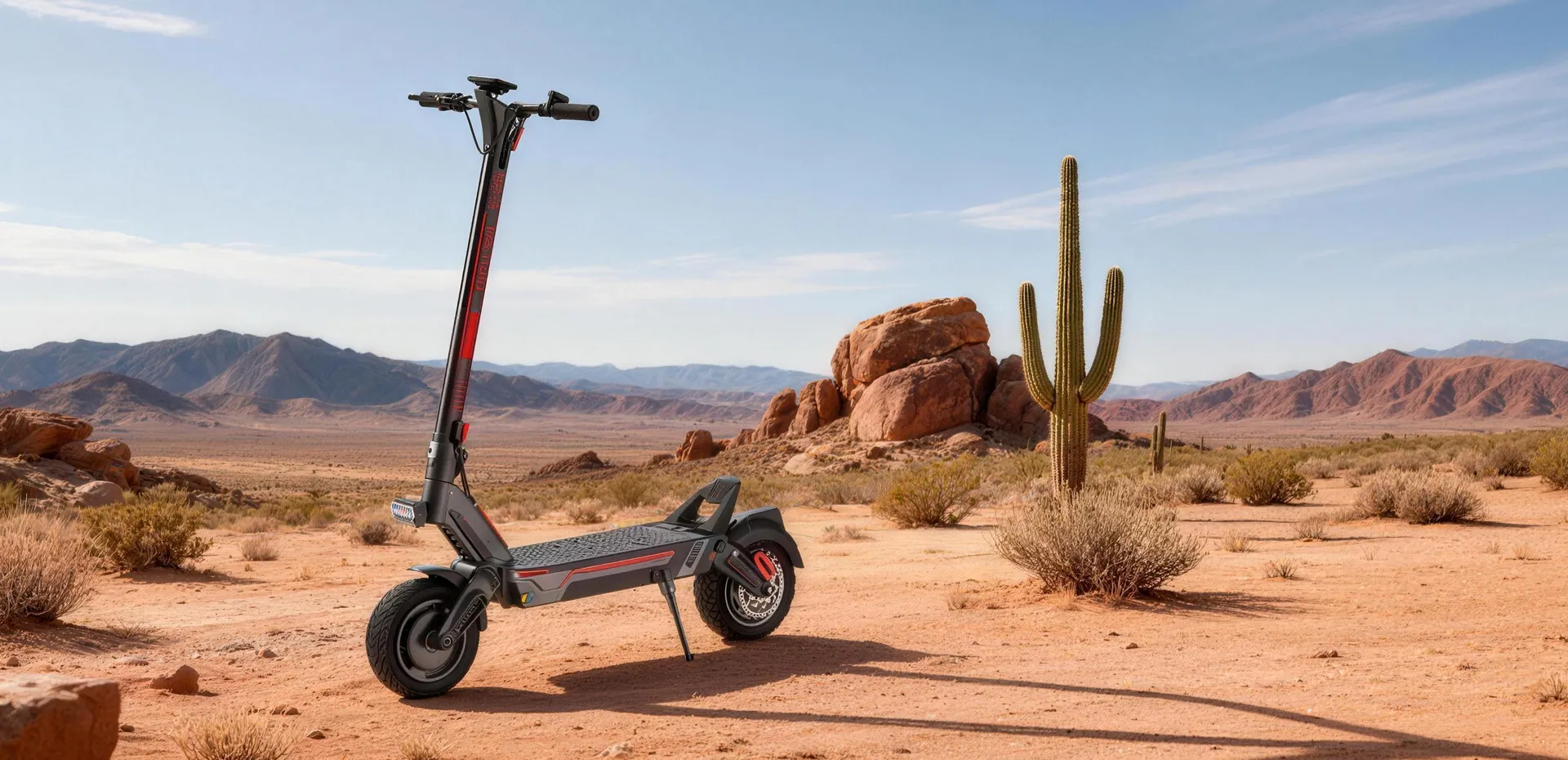
Example: The Zwheel ZSE2 ($1,400) delivers 6000W peak, a 72V battery, and hydraulic brakes — a true performance machine.
5 Key Differences: Safety, Range, Ride Quality, Durability, and Value
Let’s dive deeper into the areas that matter most.
1. Safety: Brakes, Lights, and Stability
Budget scooters often skimp on brakes. A rear foot brake might stop you from 15 mph, but it’s unreliable on wet roads or steep hills. Lights are often weak LED strips — barely visible to cars.
Mid-range and premium scooters come with dual disc brakes (or hydraulic), regenerative braking, and sometimes ABS. Lights are integrated, bright, and meet road-legal standards in many regions. Wider decks and larger tires also improve stability at higher speeds.
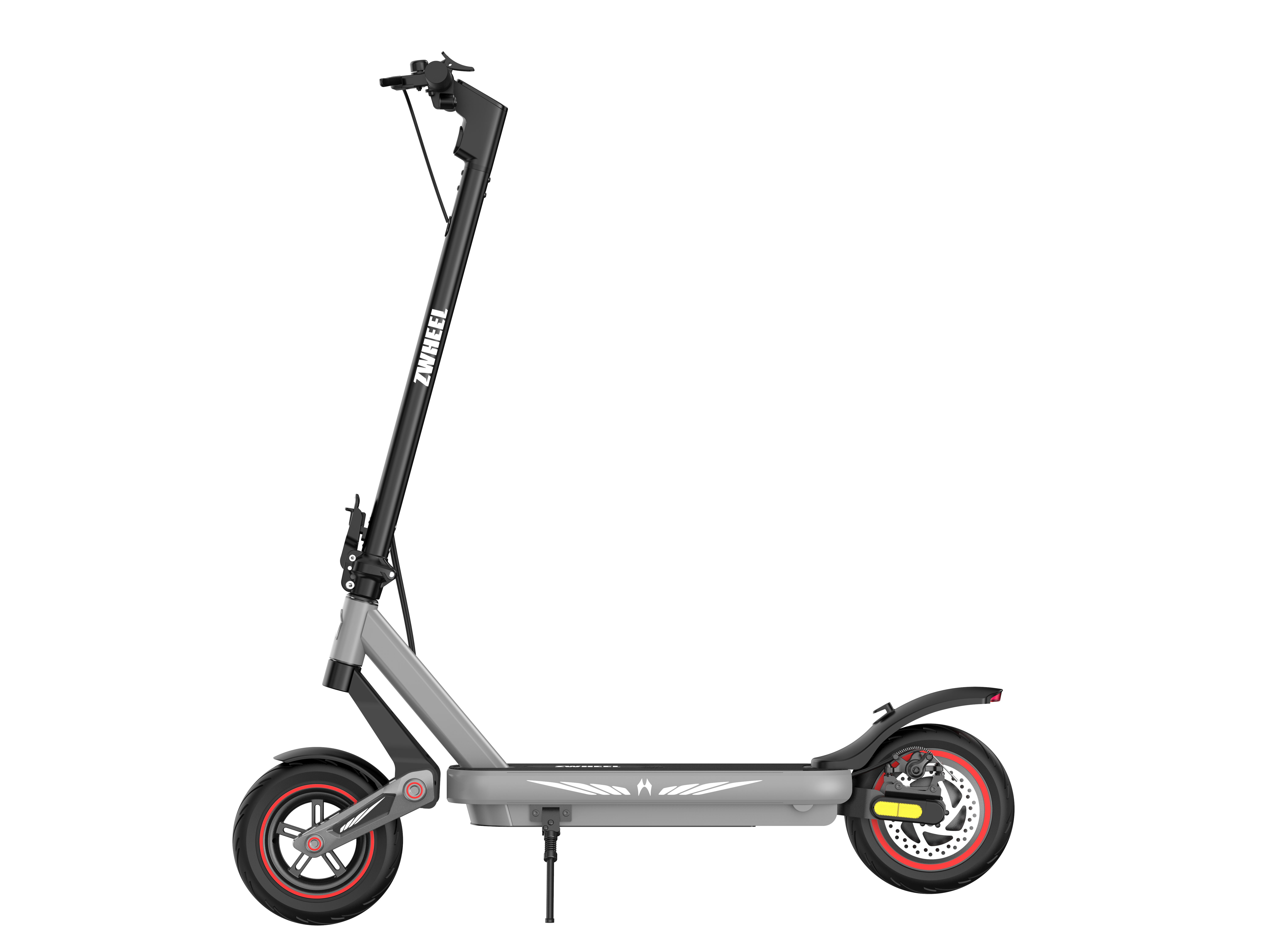
Real example: The Zwheel ZSA Plus ($499) includes a front drum brake and rear disc brake, plus a bright headlight — a big safety upgrade over sub-$300 models.
2. Range: The Real-World Difference
Budget scooters claim 15–20 miles, but real-world range (rider weight, hills, wind, cold) is often 8–12 miles. Premium models over-deliver: a 48V 15Ah battery can give you 25–30 real miles.
Why it matters: If your commute is 10 miles round trip, a budget scooter might leave you stranded on a cold day. A premium scooter gives you a comfortable buffer — and you won’t need to charge at work.
3. Ride Quality: Comfort Over Cobblestones
Solid tires on budget scooters transmit every bump to your spine. Pneumatic tires + suspension make a huge difference. Even a basic front spring (like on the D3S-S) smooths out sidewalk cracks and paved trails.
Premium scooters often have dual hydraulic suspension and large 10”+ pneumatic tires — you can roll over potholes without white-knuckling.
4. Durability and Maintenance
Budget scooters use cheaper bearings, plastic fenders, and low-grade batteries that degrade faster. You might replace the battery after 200–300 charge cycles. Premium models use LG/Samsung cells, reinforced frames, and sealed electronics that last 500–800+ cycles.
Tip: Check the IP rating. IPX4 means splash-resistant; IPX6 can handle rain and puddles. If you ride year-round, invest in waterproofing.
5. Long-Term Value: Total Cost of Ownership
A $300 scooter might last 6–12 months with daily use. A $600 scooter can last 2–3 years. A $1,200 scooter often lasts 4–5 years with minimal repairs. When you factor in battery replacement ($100–$300), the premium scooter often wins on cost-per-mile.
When Is a Budget Scooter Actually Enough?
Honestly? For very light, occasional use — think short trips on flat, dry pavement, under 5 miles, on sunny days — a budget scooter is fine. If you’re a college student moving between dorms or someone who wants a toy for the boardwalk, go budget.
But if you rely on your scooter for commuting, errands, or fun on varied terrain, the budget electric scooter vs premium decision becomes clear: premium pays for itself in safety, reliability, and joy.
Frequently Asked Questions
Is a $500 electric scooter worth it compared to a $300 one?
Yes, almost always. The $500 scooter typically has a better motor (500W vs 250W), larger battery, disc brakes, and pneumatic tires. That translates to safer, more comfortable, and longer rides. The Zwheel ZSA Plus at $499 is a perfect example of a value sweet spot.
What’s the most important feature to upgrade from budget to premium?
Battery and brakes. A larger battery (48V vs 36V) gives you real range. Disc brakes (front and rear) stop you safely at higher speeds. Everything else is secondary.
Do premium electric scooters have better resale value?
Yes. A well-maintained premium scooter can retain 50–70% of its value after a year, while budget scooters depreciate quickly. Buyers trust known brands and better components.
How much should I spend on my first electric scooter?
If you’re unsure, aim for $500–$800. You avoid the worst of budget trade-offs without overspending. The Zwheel D3S-S at $600 is an excellent first scooter that will serve you for years.
Can a budget scooter handle hills?
Very poorly. Budget scooters with 250W motors struggle on anything above a 5% grade. A 500W+ motor (like on the D3S-S) can handle 15–20% grades. For steep hills, you need 1000W+.
Conclusion: What You Actually Get (and What You Pay For)
When you compare a budget electric scooter vs premium, the differences are real and measurable: better batteries, safer brakes, smoother rides, and longer-lasting builds. But that doesn’t mean everyone needs a $1,500 scooter.
For most riders, the sweet spot is $500–$800 — where you get genuine upgrades without paying for racing-level performance. Brands like Zwheel offer models like the ZSA Plus and D3S-S that deliver premium features at mid-range prices.
Ultimately, what you actually get with a premium scooter is peace of mind. You won’t worry about range anxiety, brake failure, or your scooter dying after a season. And that, for many riders, is worth every penny.
Ready to find your perfect scooter? Check out Zwheel’s full lineup at zwheel.com.
Автор
Zwheel Team
Член редакционной команды Zwheel.