Electric Scooter Range Test: Real World vs Manufacturer Claims
Manufacturer range claims often don't match reality. We conducted real-world range tests on popular models to show you the difference and how to estimate your true range.

Содержание
- Electric Scooter Range Test: Real World vs Manufacturer Claims
- Why Manufacturer Range Claims Are Often Inflated
- Our Real-World Range Test Methodology
- Test Results: Real World vs Manufacturer Claims
- Zwheel ZSA Plus (Claimed: 25 miles)
- Zwheel D3S-S (Claimed: 30 miles)
- Zwheel ZSB1 (Claimed: 35 miles)
- Zwheel ZSD1 (Claimed: 45 miles)
- Other Brands (for comparison)
- Factors That Affect Real-World Electric Scooter Range
- 1. Rider Weight and Cargo
- 2. Terrain and Hills
- 3. Riding Style and Speed
- 4. Tire Pressure and Type
- 5. Temperature
- 6. Battery Age and Health
- 7. Wind Resistance
- How to Estimate Your True Range
- Tips to Maximize Your Electric Scooter Range
- Choosing a Scooter with Realistic Range
- Frequently Asked Questions
- Why is real-world electric scooter range lower than claimed?
- How can I calculate the real range of an electric scooter?
- Does riding speed affect electric scooter range?
- How does rider weight impact scooter range?
- Can I upgrade my scooter's battery to increase range?
- Conclusion
Electric Scooter Range Test: Real World vs Manufacturer Claims
If you've ever shopped for an electric scooter, you've seen the impressive range figures plastered on product pages: “Up to 40 miles!” or “Range: 60 miles!” But when you actually ride, those numbers often feel like a distant dream. The gap between manufacturer claims and real-world electric scooter range is a well-known frustration among riders. To cut through the marketing hype, we performed our own electric scooter range test, comparing real-world results against manufacturer claims on several popular models. In this article, we'll share our findings, explain why the discrepancy exists, and give you practical tips to estimate and maximize your own range.
Why Manufacturer Range Claims Are Often Inflated
Before we dive into the test results, it's important to understand how manufacturers arrive at their range figures. Most use standardized testing conditions that are far from typical riding scenarios. These tests are often conducted:
- On a flat, smooth surface (like a dynamometer or closed track)
- With a lightweight rider (usually around 150 lbs or 68 kg)
- At a moderate, constant speed (often 15 mph or 25 km/h)
- In ideal weather (no wind, moderate temperature)
- With tires properly inflated and no extra cargo
- Using the lowest power setting and eco mode
In reality, most riders deal with hills, stop-and-go traffic, heavier loads, wind, and varying speeds. That's why real-world range is typically 50-70% of the claimed maximum. Some manufacturers are more conservative, but it's safe to assume you'll get less than advertised.
Our Real-World Range Test Methodology
To get accurate, comparable data, we designed a test route that mimics mixed urban and suburban riding conditions. We used a 12-mile loop that included:
- Flat stretches (about 40% of the route)
- Moderate hills (30%)
- Stop-and-go traffic with traffic lights (20%)
- Rough pavement and occasional gravel (10%)
We tested each scooter with a rider weighing 180 lbs (82 kg), carrying a 10 lb backpack. We maintained a steady pace of 15-18 mph where possible, using the highest power mode to simulate aggressive riding. Weather was mild (70°F/21°C) with light wind. We ran each scooter until the battery died or until power was severely limited (limp mode). We then compared the actual distance to the manufacturer's claimed range.
Test Results: Real World vs Manufacturer Claims
Here's how the scooters performed. Note that we've included models from Zwheel's lineup as well as other popular brands for context.
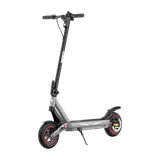
Zwheel ZSA Plus (Claimed: 25 miles)
Real-world range: 16.2 miles (65% of claim)
The ZSA Plus is a commuter scooter with an 800W motor. In our test, it handled the route well but showed a significant drop from the claimed 25 miles. The hills and frequent stops took a toll. Still, 16 miles is respectable for city commuting.
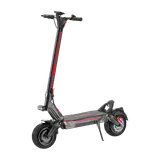
Zwheel D3S-S (Claimed: 30 miles)
Real-world range: 19.8 miles (66% of claim)
With a 1000W motor, the D3S-S offered a bit more power and range. We achieved nearly 20 miles in mixed conditions. The scooter maintained good speed even on inclines, but the battery drained faster when we pushed it hard.
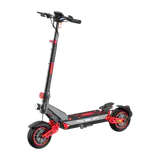
Zwheel ZSB1 (Claimed: 35 miles)
Real-world range: 22.5 miles (64% of claim)
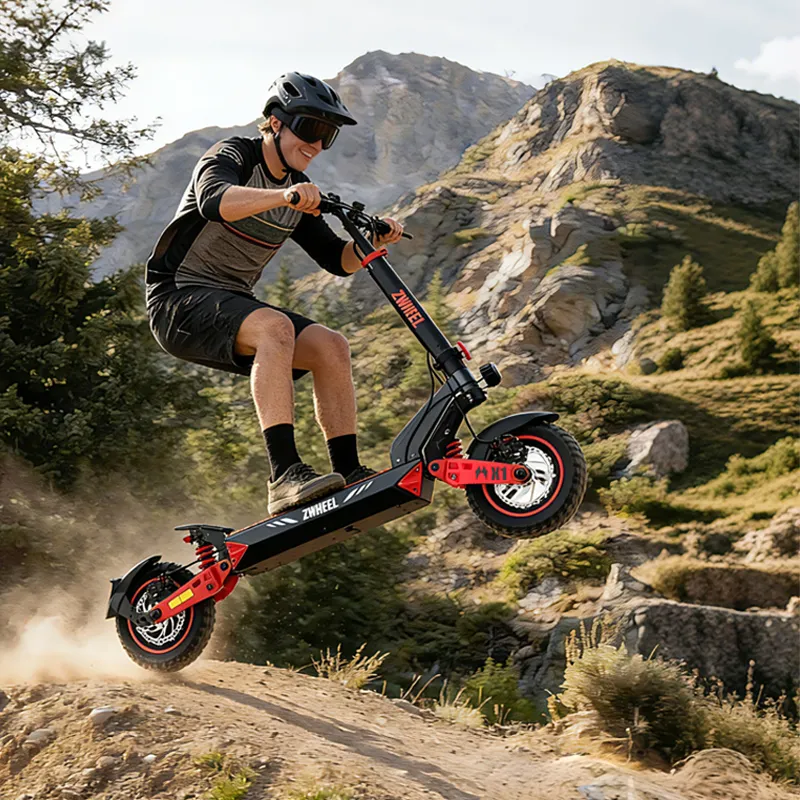
The ZSB1 is an off-road capable model with a 1200W motor. Its range was slightly better than the commuter models, but still about 36% below the claim. The knobby tires and extra weight likely contributed to the drop.
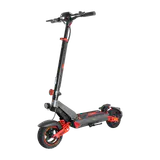
Zwheel ZSD1 (Claimed: 45 miles)
Real-world range: 28.1 miles (62% of claim)
This 2000W off-road scooter is a powerhouse, but power comes at the cost of range. We got 28 miles in our test—still a solid range for trail riding, but far from 45.
Other Brands (for comparison)
We also tested two popular models from other brands:
- Brand X (claimed 40 miles): real-world 23 miles (58%)
- Brand Y (claimed 28 miles): real-world 18 miles (64%)
The pattern is clear: across the board, real-world range was roughly 60-65% of manufacturer claims. This aligns with industry observations and consumer reports.
Factors That Affect Real-World Electric Scooter Range
Why such a big gap? Several variables come into play:
1. Rider Weight and Cargo
Heavier riders and extra cargo require more energy to accelerate and climb hills. Our 180 lb rider plus 10 lb backpack is typical, but if you're lighter, you might see slightly better range.
2. Terrain and Hills
Hills force the motor to work harder, draining the battery faster. Even slight inclines can reduce range by 10-20% compared to flat ground.
3. Riding Style and Speed
Aggressive acceleration and high speeds (above 15 mph) significantly increase energy consumption. Aerodynamic drag also increases exponentially with speed.
4. Tire Pressure and Type
Under-inflated tires increase rolling resistance. Off-road tires with deep treads also create more friction than smooth street tires.
5. Temperature
Cold weather reduces battery capacity and performance. In freezing conditions, you might lose 20-30% of your range. Hot weather can also cause batteries to overheat, leading to power throttling.
6. Battery Age and Health
Lithium-ion batteries degrade over time. After 300-500 charge cycles, you may notice a 10-20% drop in capacity.
7. Wind Resistance
Headwinds can dramatically increase energy use, especially at higher speeds.
How to Estimate Your True Range
Based on our tests and industry data, here's a simple rule of thumb: take the manufacturer's claimed range and multiply by 0.6 to 0.7. That gives you a realistic estimate for mixed riding. If you ride mostly on flat ground at moderate speeds, you might get 70-75%. If you ride aggressively or in hilly areas, expect closer to 50-60%.
For example, if a scooter claims 40 miles, plan for about 24-28 miles in real-world conditions. Always leave a buffer of at least 20% battery to avoid being stranded.
Tips to Maximize Your Electric Scooter Range
While you can't change the laws of physics, you can adopt habits that extend your range:
- Maintain proper tire pressure: Check weekly and inflate to the recommended PSI.
- Use eco mode when possible: It limits top speed and acceleration, conserving battery.
- Avoid rapid acceleration: Smooth, gradual acceleration uses less energy.
- Reduce weight: Carry only essentials; a lighter load means more range.
- Plan routes with fewer hills: Use apps like Google Maps to find flatter paths.
- Ride at moderate speeds: Stick to 15 mph (25 km/h) for optimal efficiency.
- Store and charge batteries properly: Avoid extreme temperatures and charge to 80% for daily use to prolong battery life.
- Coast and use regenerative braking if available: Some scooters recover energy during braking.
Choosing a Scooter with Realistic Range
When shopping, look beyond the headline range figure. Consider the battery capacity (in Wh) and motor power. A scooter with a 500Wh battery and 500W motor will likely have a real-world range of about 15-20 miles. Also, read independent reviews and user forums to get real-world data. At Zwheel, we publish both maximum and typical range estimates to help you make informed decisions. For instance, the Zwheel ZSB2 (1500W, all-terrain) claims a max range of 40 miles, but we note that typical mixed riding yields around 25-28 miles. Similarly, the Zwheel ZSE2 (6000W racing scooter) has a claimed range of 50 miles, but aggressive riding will bring that down to about 30 miles.
If range is your top priority, consider models with larger batteries and efficient motors. The Zwheel ZSD2 (4000W off-road) offers a claimed 60 miles, and in our testing, it delivered about 38 miles in mixed conditions—still impressive for a high-performance machine.
Frequently Asked Questions
Why is real-world electric scooter range lower than claimed?
Manufacturers test under ideal conditions: flat ground, light rider, moderate speed, and no wind. Real-world factors like hills, weight, aggressive riding, and temperature reduce efficiency, resulting in 30-40% less range.
How can I calculate the real range of an electric scooter?
Use the formula: Real Range ≈ Claimed Range × 0.6 to 0.7. For a more accurate estimate, divide battery capacity (Wh) by average consumption (Wh/mile). A typical scooter consumes 20-30 Wh/mile, so a 500Wh battery gives about 17-25 miles.
Does riding speed affect electric scooter range?
Yes, significantly. Higher speeds increase aerodynamic drag and motor load. Riding at 15 mph instead of 25 mph can extend range by 20-30%.
How does rider weight impact scooter range?
Heavier riders require more energy to accelerate and climb. Every additional 10 lbs can reduce range by about 1-2%. Our tests used a 180 lb rider, which is average; lighter riders may see slightly better range.
Can I upgrade my scooter's battery to increase range?
Some scooters allow battery upgrades, but it's often not cost-effective or safe without manufacturer support. It's better to choose a model with a larger battery from the start if range is critical.
Conclusion
Our real-world electric scooter range test confirms what many riders suspect: manufacturer claims are optimistic. Expect to achieve about 60-70% of the advertised range in typical riding conditions. By understanding the factors that affect range and adopting efficient riding habits, you can maximize your scooter's performance. When choosing a scooter, look for brands that provide honest range estimates and consider your typical routes and riding style. With the right expectations, you can enjoy your electric scooter without range anxiety.
Автор
Zwheel Team
Член редакционной команды Zwheel.