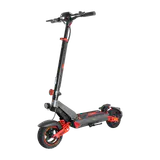
10-Inch vs 11-Inch Tires for Electric Scooters: Which Is Better?
Choosing between 10-inch and 11-inch tires for your electric scooter? We break down comfort, stability, range, and cost so you can decide with confidence.

Indice
- 10-Inch vs 11-Inch Tires for Electric Scooters: Which Size Is Right for You?
- Why Tire Size Matters on an Electric Scooter
- Ride Comfort and Shock Absorption
- Stability and Handling
- Range and Efficiency
- Cost and Maintenance
- 10-Inch vs 11-Inch Tires for Electric Scooters: Key Comparisons
- Comfort and Shock Absorption
- Stability at Speed
- Agility and Maneuverability
- Range and Efficiency
- Cost and Availability
- Which Tire Size Suits Your Riding Style?
- For City Commuters
- For Off-Road and All-Terrain Riding
- For High-Speed and Performance Riding
- Practical Tips for Choosing and Maintaining Tires
- Frequently Asked Questions
- Are 11-inch tires better than 10-inch for electric scooters?
- Can I replace 10-inch tires with 11-inch tires on my scooter?
- Do 11-inch tires reduce range?
- Which tire size is more comfortable for bumpy roads?
- Are 10-inch tires cheaper to replace?
- Conclusion
10-Inch vs 11-Inch Tires for Electric Scooters: Which Size Is Right for You?
When you're shopping for an electric scooter, tire size might seem like a minor detail—but it's one of the most important specs you'll encounter. The difference between 10-inch and 11-inch tires for electric scooters affects everything from ride comfort and stability to range and maintenance costs. In this guide, we'll break down the real-world differences so you can choose the right scooter for your needs.
Whether you're a daily commuter navigating city streets or a weekend adventurer hitting dirt trails, understanding how tire size impacts performance will help you make a smarter purchase. Let's dive in.
Why Tire Size Matters on an Electric Scooter
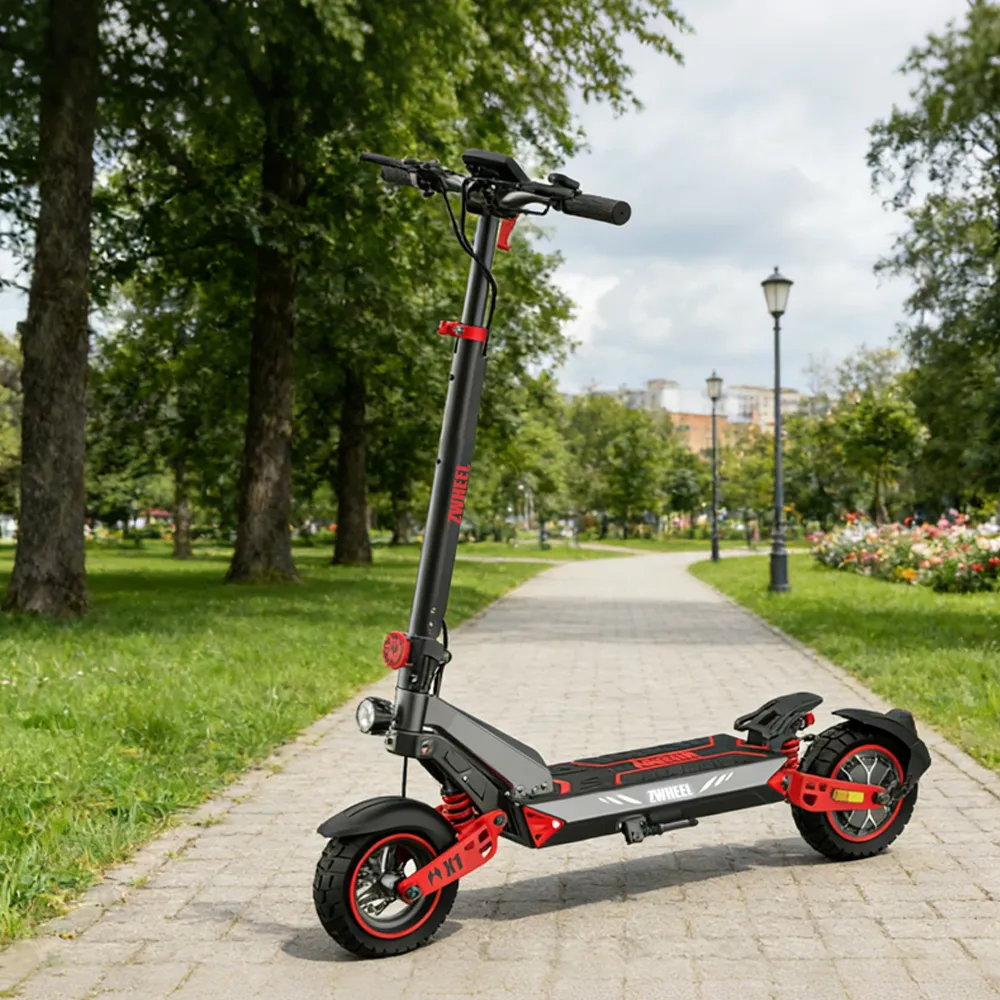
Tires are your scooter's only contact with the ground. Their diameter influences how bumps are absorbed, how stable the scooter feels at speed, and even how efficiently the motor delivers power. A larger tire generally rolls over obstacles more easily, while a smaller tire can offer quicker acceleration and a lower deck height. But the trade-offs go deeper than that.
In the 10-inch vs 11-inch debate, the differences are subtle but meaningful. An inch might not sound like much, but it translates to roughly 10% more circumference—and that changes the ride in noticeable ways.
Ride Comfort and Shock Absorption
Larger tires have a larger contact patch and more air volume, which helps absorb road imperfections. An 11-inch tire can roll over potholes, cracks, and curbs more smoothly than a 10-inch tire, especially if the scooter lacks advanced suspension. That said, tire construction (pneumatic vs solid) and suspension quality matter just as much. A high-quality 10-inch pneumatic tire on a scooter with good suspension can feel plusher than a cheap 11-inch solid tire.
If you ride on rough city streets or unpaved paths, the extra inch on 11-inch tires provides a noticeable comfort advantage—particularly at higher speeds.
Stability and Handling
Larger tires increase the scooter's overall wheelbase slightly and raise the center of gravity, which can affect handling. In practice, 11-inch tires tend to feel more stable at high speeds and over uneven terrain because they resist deflection from obstacles. They also provide better traction on loose surfaces like gravel or dirt.
However, 10-inch tires can feel more nimble in tight spaces and may offer quicker turn-in for agile city riding. For most commuters, the difference is marginal, but aggressive riders may notice the extra stability of 11-inch wheels.
Range and Efficiency
Larger tires are heavier and have more rotational inertia, which can slightly reduce acceleration and range. However, the difference is often offset by better rolling efficiency over rough surfaces—an 11-inch tire may maintain momentum better on uneven ground, requiring less energy to keep moving. In real-world testing, range differences between 10-inch and 11-inch tires are typically within 5%, so it's not a deciding factor unless you're pushing the limits of your battery.
Cost and Maintenance
10-inch tires are more common, which means replacements are generally cheaper and easier to find. You'll pay a bit more for 11-inch tires and may have fewer options. However, the price gap is shrinking as more manufacturers adopt 11-inch sizes. Maintenance intervals are similar, but larger tires may wear slightly slower due to a larger contact patch distributing wear.
10-Inch vs 11-Inch Tires for Electric Scooters: Key Comparisons
To make the choice clearer, here's a side-by-side breakdown of the most important factors.
Comfort and Shock Absorption
Winner: 11-inch. The larger air volume and diameter provide a smoother ride over bumps and cracks. If you have back or joint issues, 11-inch tires are worth considering.
Stability at Speed
Winner: 11-inch. The extra contact patch and larger diameter resist wobble and deflection, making high-speed riding feel more planted.
Agility and Maneuverability
Winner: 10-inch. Smaller tires turn quicker and make the scooter feel more responsive in tight urban environments.
Range and Efficiency
Draw. Differences are minimal; riding style and terrain have a bigger impact.
Cost and Availability
Winner: 10-inch. Tires are cheaper and more widely available, though 11-inch options are growing.
Which Tire Size Suits Your Riding Style?
Your typical riding environment should guide your decision. Here's how to match tire size to your needs.
For City Commuters
If you ride mostly on paved roads and need to weave through traffic, a 10-inch tire offers a good balance of agility and comfort. Many commuter scooters, like the Zwheel ZSA Plus (800W, $499), use 10-inch tires to keep the deck low and the ride nimble. For a step up in power and stability, the Zwheel D3S-S (1000W, $600) also features 10-inch tires and is built for urban commuting.
For Off-Road and All-Terrain Riding
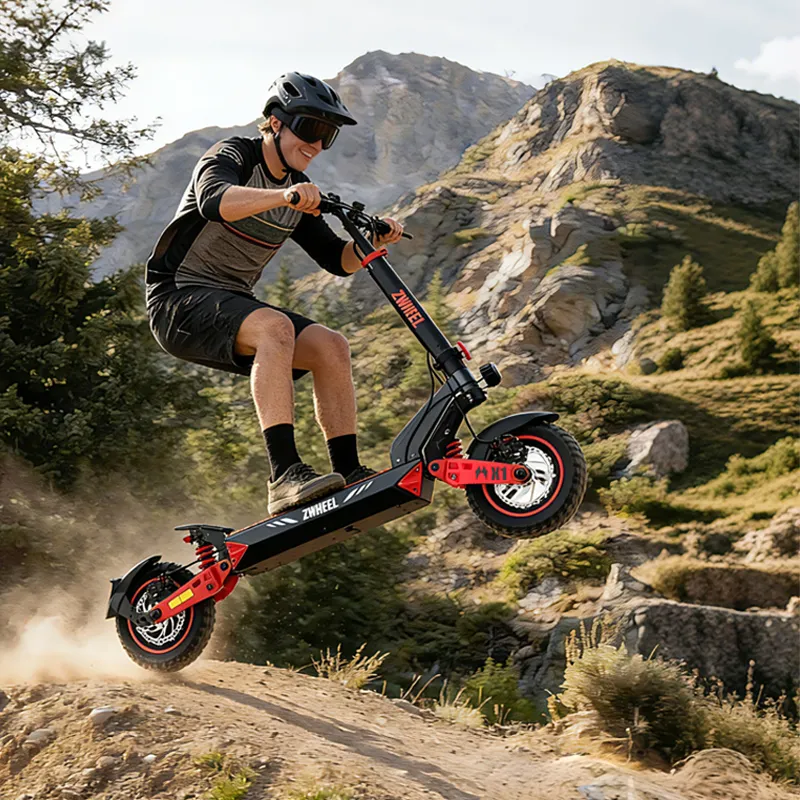
If you venture onto gravel, dirt, or grass, 11-inch tires provide better traction and comfort. Off-road models like the Zwheel ZSB1 (1200W, $599) often use larger tires to handle rough terrain. For more demanding trails, consider the Zwheel ZSD1 (2000W, $800), which pairs a powerful motor with off-road-ready tires.
For High-Speed and Performance Riding
At higher speeds, stability becomes critical. 11-inch tires are generally preferred for performance scooters because they resist wobble and provide a larger contact patch. The Zwheel ZSE2 (6000W, $1400) is a racing-grade scooter that benefits from larger tires for high-speed stability.
Practical Tips for Choosing and Maintaining Tires
Regardless of size, proper tire care extends lifespan and improves safety. Here are some actionable tips:
- Check tire pressure weekly. Proper inflation (usually 35-50 PSI for pneumatic tires) improves range, comfort, and tire life.
- Inspect for wear. Replace tires when tread depth is less than 1/16 inch or when you see cracks or bulges.
- Consider tire type. Pneumatic tires offer comfort; solid tires are puncture-proof but less forgiving. Tubeless tires are becoming popular for their self-sealing properties.
- Rotate tires if possible. Some scooters allow front-rear rotation to even out wear.
- Upgrade suspension first. If comfort is your main concern, a scooter with good suspension and 10-inch tires may outperform a rigid scooter with 11-inch tires.
Frequently Asked Questions
Are 11-inch tires better than 10-inch for electric scooters?
Not inherently—it depends on your needs. 11-inch tires offer better comfort and stability, especially on rough terrain, while 10-inch tires provide agility and lower costs. For city commuting, 10-inch is often sufficient; for off-road or high-speed riding, 11-inch is preferable.
Can I replace 10-inch tires with 11-inch tires on my scooter?
Generally no, unless your scooter is designed to accommodate both sizes. The frame, fenders, and brake calipers are engineered for a specific tire diameter. Attempting to upsize can cause clearance issues and compromise safety. Always consult your manufacturer.
Do 11-inch tires reduce range?
They can slightly reduce range due to increased weight and rotational inertia, but the difference is usually small (under 5%). Better rolling efficiency over rough surfaces may offset the loss. Riding style and terrain have a much larger impact on range.
Which tire size is more comfortable for bumpy roads?
11-inch tires generally provide better shock absorption due to larger air volume and diameter. However, tire type (pneumatic vs solid) and suspension quality also play major roles. A 10-inch pneumatic tire on a well-suspended scooter can be very comfortable.
Are 10-inch tires cheaper to replace?
Yes, 10-inch tires are typically less expensive and more widely available than 11-inch tires. However, prices vary by brand and tire type. Always factor in longevity and performance, not just upfront cost.
Conclusion
Choosing between 10-inch and 11-inch tires for electric scooters comes down to your riding style and priorities. If you value agility, lower costs, and mostly ride on smooth pavement, 10-inch tires are a smart choice. If comfort, stability, and off-road capability matter more, 11-inch tires are worth the investment. Whichever you choose, proper maintenance and inflation will keep your ride safe and enjoyable.
Ready to find your perfect scooter? Explore Zwheel's lineup of electric scooters, including models with 10-inch and 11-inch tires, to match your riding needs.
Scritto da
Zwheel Team
Parte del team editoriale Zwheel, con focus su mobilita elettrica, guide prodotti e consigli.