Electric Scooter Regenerative Braking: How It Works
Regenerative braking turns your electric scooter's momentum into battery power. Here's how it works, its real-world benefits, and how to use it effectively.
目录
- Electric Scooter Regenerative Braking: How It Works
- What Is Regenerative Braking?
- How Regenerative Braking Works on Electric Scooters
- 1. You Trigger Deceleration
- 2. The Motor Becomes a Generator
- 3. Energy Flows Back to the Battery
- 4. Blending with Mechanical Brakes
- Benefits of Regenerative Braking
- Extended Range
- Reduced Brake Wear
- Smoother Riding Experience
- Environmental Impact
- Maximizing Regenerative Braking Efficiency
- Anticipate Stops
- Use Higher Regen Settings (If Available)
- Maintain Optimal Tire Pressure
- Ride in Stop-and-Go Conditions
- Keep Your Battery in Good Health
- Common Misconceptions About Regenerative Braking
- “Regen Can Fully Recharge Your Battery”
- “Regen Works Equally at All Speeds”
- “All E-Scooters Have Regen”
- The Future of Regenerative Braking in E-Scooters
- Frequently Asked Questions
- Does regenerative braking actually increase range?
- Can I turn off regenerative braking?
- Is regenerative braking bad for the battery?
- Why does my scooter slow down when I release the throttle?
- Do all electric scooters have regenerative braking?
- Conclusion
Electric Scooter Regenerative Braking: How It Works
If you've ever ridden an electric scooter, you've likely noticed that when you release the throttle or squeeze the brake lever, the scooter slows down smoothly—and sometimes, the battery gauge ticks up slightly. That's regenerative braking at work. This technology, borrowed from electric cars and trains, converts kinetic energy into electrical energy and sends it back to the battery. But how exactly does it function on a scooter, and is it worth the hype? In this guide, we'll break down the mechanics, benefits, and practical tips for using regenerative braking to extend your ride.
What Is Regenerative Braking?
Regenerative braking (often called regen) is a system that recovers energy during deceleration. In a traditional braking system, friction pads clamp onto a disc or drum, converting kinetic energy into heat—energy that's lost forever. Regenerative braking, on the other hand, uses the scooter's electric motor as a generator. When you brake or coast, the motor's resistance slows the wheels while simultaneously producing electricity that's fed back into the battery.
This not only recovers some energy but also reduces wear on traditional brake pads, making it a win-win for efficiency and maintenance.
How Regenerative Braking Works on Electric Scooters
The process involves three main components: the motor, the motor controller, and the battery. Here's a step-by-step breakdown:
1. You Trigger Deceleration
When you release the throttle or engage the brake lever (depending on the scooter's design), the motor controller detects the change and initiates regenerative braking.
2. The Motor Becomes a Generator
The controller reverses the current flow, turning the motor into a generator. As the wheels spin, they turn the motor's rotor, inducing an electromagnetic force (EMF) that produces electricity.
3. Energy Flows Back to the Battery
The generated electricity is converted by the controller into a voltage suitable for the battery and stored. The resistance created by this process slows the scooter—this is the braking effect.
4. Blending with Mechanical Brakes
Most scooters blend regen with mechanical brakes for safety. At low speeds or during hard stops, the mechanical brakes take over because regen loses effectiveness as motor RPM drops.
It's a clever system, but its efficiency depends on factors like speed, battery state of charge, and motor design.
Benefits of Regenerative Braking
Regenerative braking isn't just a gimmick—it offers tangible advantages:
Extended Range
By recovering energy, regen can add 5–15% to your scooter's range, depending on riding conditions. In stop-and-go city traffic, where you brake frequently, the benefit is more pronounced. For example, a scooter with a 30-mile range might gain an extra 2–4 miles.
Reduced Brake Wear
Since regen slows the scooter before the mechanical brakes engage, your brake pads last longer. This can save you money on replacements and reduce maintenance.
Smoother Riding Experience
Regen provides a gentle, progressive braking feel that many riders find more comfortable than abrupt mechanical braking, especially at higher speeds.
Environmental Impact
While the energy savings are small, every bit of recovered energy reduces the demand on the grid, making your rides slightly greener.
Maximizing Regenerative Braking Efficiency
To get the most out of regen, follow these practical tips:
Anticipate Stops
Instead of hard braking, ease off the throttle early and let regen slow you down gradually. This maximizes energy recovery and reduces wear on mechanical brakes.
Use Higher Regen Settings (If Available)
Many scooters let you adjust regen strength. A higher setting recovers more energy but can feel jerky; find a balance that suits your riding style.
Maintain Optimal Tire Pressure
Under-inflated tires increase rolling resistance, forcing the motor to work harder and reducing regen efficiency. Check your tires regularly.
Ride in Stop-and-Go Conditions
Regen shines in urban environments with frequent stops. On long highway stretches, you'll see less benefit.
Keep Your Battery in Good Health
Regen works best when the battery isn't full or extremely cold. In very cold weather, regen may be limited to protect the battery.
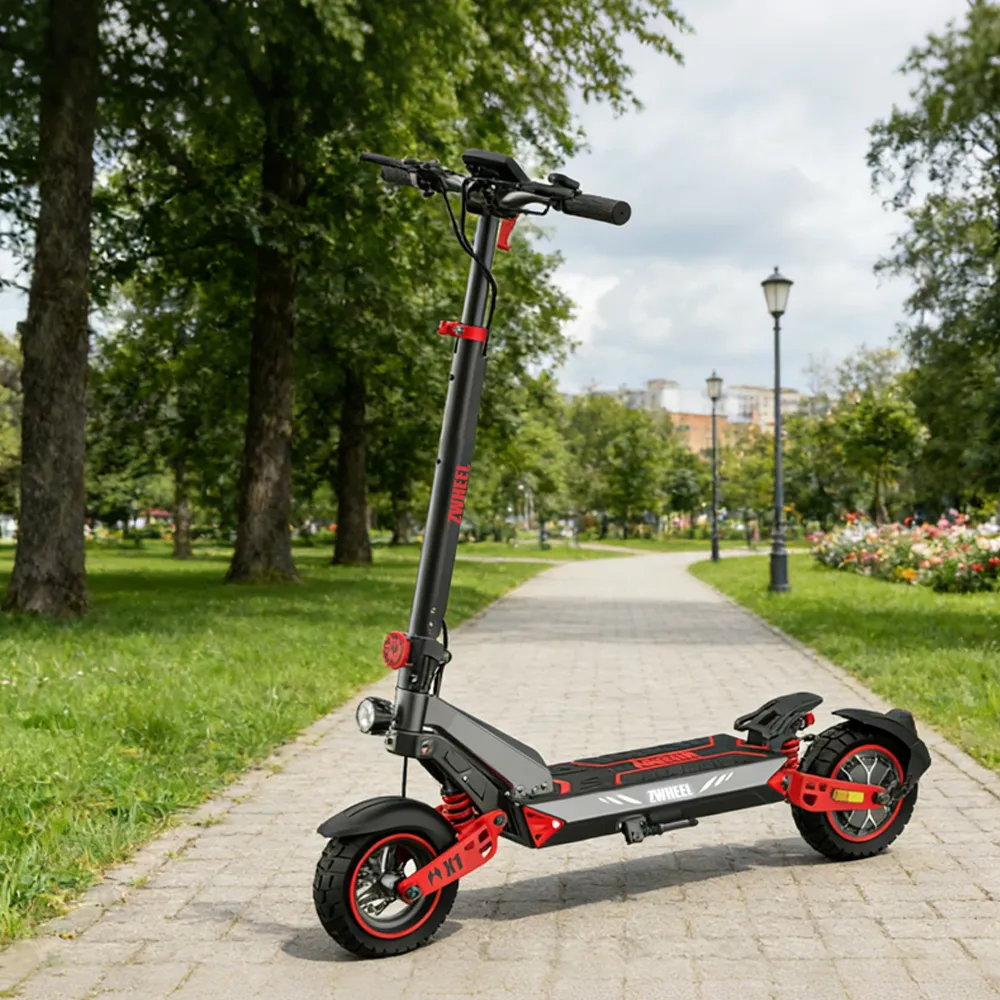
At Zwheel, our scooters like the ZSA Plus and D3S-S feature advanced regenerative braking systems tuned for city commuting, helping you squeeze every mile out of your charge.
Common Misconceptions About Regenerative Braking
“Regen Can Fully Recharge Your Battery”
No—regen recovers only a fraction of the energy used to accelerate. It's a supplement, not a replacement for plugging in.
“Regen Works Equally at All Speeds”
Regen is most effective at higher speeds and tapers off as you slow down. Mechanical brakes handle low-speed stops.
“All E-Scooters Have Regen”
Not all do. Entry-level models often omit it to cut costs. If range is a priority, look for a scooter with regen—like our ZSB2, which combines regen with a powerful 1500W motor for all-terrain adventures.
The Future of Regenerative Braking in E-Scooters
As battery technology advances, regen systems are becoming more sophisticated. We're seeing adaptive regen that adjusts based on riding conditions, and integration with smart apps that show real-time energy recovery. With the push for sustainable urban mobility, regen is likely to become standard even on budget scooters. Zwheel continues to innovate, incorporating efficient regen into models like the ZSE2 racing scooter, where every bit of energy counts.
Frequently Asked Questions
Does regenerative braking actually increase range?
Yes, but modestly—typically 5–15% in city riding. The exact gain depends on your route, speed, and how often you brake.
Can I turn off regenerative braking?
Many scooters allow you to adjust or disable regen via settings. Check your manual or app. Some riders prefer a coasting feel, but you'll lose the efficiency benefit.
Is regenerative braking bad for the battery?
No, it's designed to be safe. The controller regulates the charge rate to prevent damage. However, regen is limited when the battery is nearly full or very cold.
Why does my scooter slow down when I release the throttle?
That's likely regen kicking in—it's normal and helps recover energy. If it feels too strong, adjust the regen level in your scooter's settings.
Do all electric scooters have regenerative braking?
No, only those with brushless DC motors and compatible controllers. It's more common on mid-range and premium models.
Conclusion
Regenerative braking is a smart, efficient technology that enhances your electric scooter's range and reduces wear. By understanding how it works and using it wisely, you can get more out of every ride. Whether you're commuting on a Zwheat ZSA Plus or hitting trails on a ZSB2, regen is a feature worth appreciating. Ready to experience it yourself? Explore our lineup and find the perfect scooter for your adventures.
作者
Zwheel Team
Zwheel 编辑团队成员,专注于电动出行趋势、产品指南和骑行技巧。